Your career fair is two weeks away. You know you should go, but you haven’t researched the companies, your resume is basically the same one you’ve been using everywhere, and you’re panicking.
These career fair tips will help you research employers, prepare your resume and pitch, know what to do at the event, and follow up afterward. We break it down by what to do two weeks before, one week before, the day before, the day of, and the day after.
Two Weeks Before the Career Fair: Pick Your Targets
Your first task is to figure out what to do at a career fair and where to spend your time.
It can be tempting to look at the full list of employers and think, “I should research and check out all of them, just in case”. Don’t. You’ll end up spending hours reading about companies you’re not particularly interested in, and you’ll still feel unprepared when the day arrives.
Your goal is to have a handful of meaningful conversations with recruiters who might actually be able to help you move forward.
Start by narrowing down your list
Find the list of companies attending the career fair and go through it with your career goals in mind. Cross off employers that don’t hire for your field, don’t offer the types of roles you’re interested in, or simply aren’t a good match for what you’re looking for right now.
Then, create a shortlist of 10 companies. We recommend dividing them into two groups:
- 5 priority companies: The employers you’re most interested in and definitely want to talk to.
- 5 additional companies: Employers that look interesting or have relevant opportunities, but aren’t your top choices.
Do a 15-minute research sprint for each company
Research each company quickly. Look at their website, current job openings, recent news, and anything else that can give you a better sense of what they do and what they’re looking for.
Don’t spend hours on this. You just want to know enough to answer two questions: Why am I interested in this company? What would I like to ask them?
For each company on your list, jot down:
- Company name:
- Role(s) I’m interested in:
- One thing worth knowing about the company:
- One question I want to ask:
Just these few steps can make a huge difference when you walk up to the booth. Instead of starting with, “So, what does your company do?” you’ll be able to have a conversation that shows you’ve prepared ahead.
One Week Before the Career Fair: Get Your Materials and Pitch Ready
One week out, move from research to preparation. You know which companies you want to talk to, so now you need to make sure you’re ready. There are two things to focus on this week: your resume and your elevator pitch.
Build resumes for the roles you’re targeting
Create two or three versions of your resume based on the types of roles you’re targeting.
For example:
- Marketing and communications: Emphasize writing, communication, campaigns, social media, presentations, and other relevant projects.
- Analytics and business: Highlight data analysis, research, problem-solving, Excel, quantitative coursework, or other analytical experience.
- General internships: Focus on transferable skills like teamwork, organization, communication, adaptability, and time management.
Here are our resume tips based on what recruiters are looking for in the context of university career fairs:
- Place your education section at the top of your resume and make sure you list your university, expected graduation date, what you’re majoring in, and your GPA (if 3.5 or higher).
- If you’re a freshman, it’s okay to keep your high school info. If not, focus on filling your resume out with college details.
- For your Experience section: if you haven’t landed an internship yet, it’s ok to keep your high school work here. If you already completed an internship or two, feature that information in the experience section, and drop the high school jobs.
- Have a separate section for extracurricular activities where you’ll list relevant classes, clubs and awards.
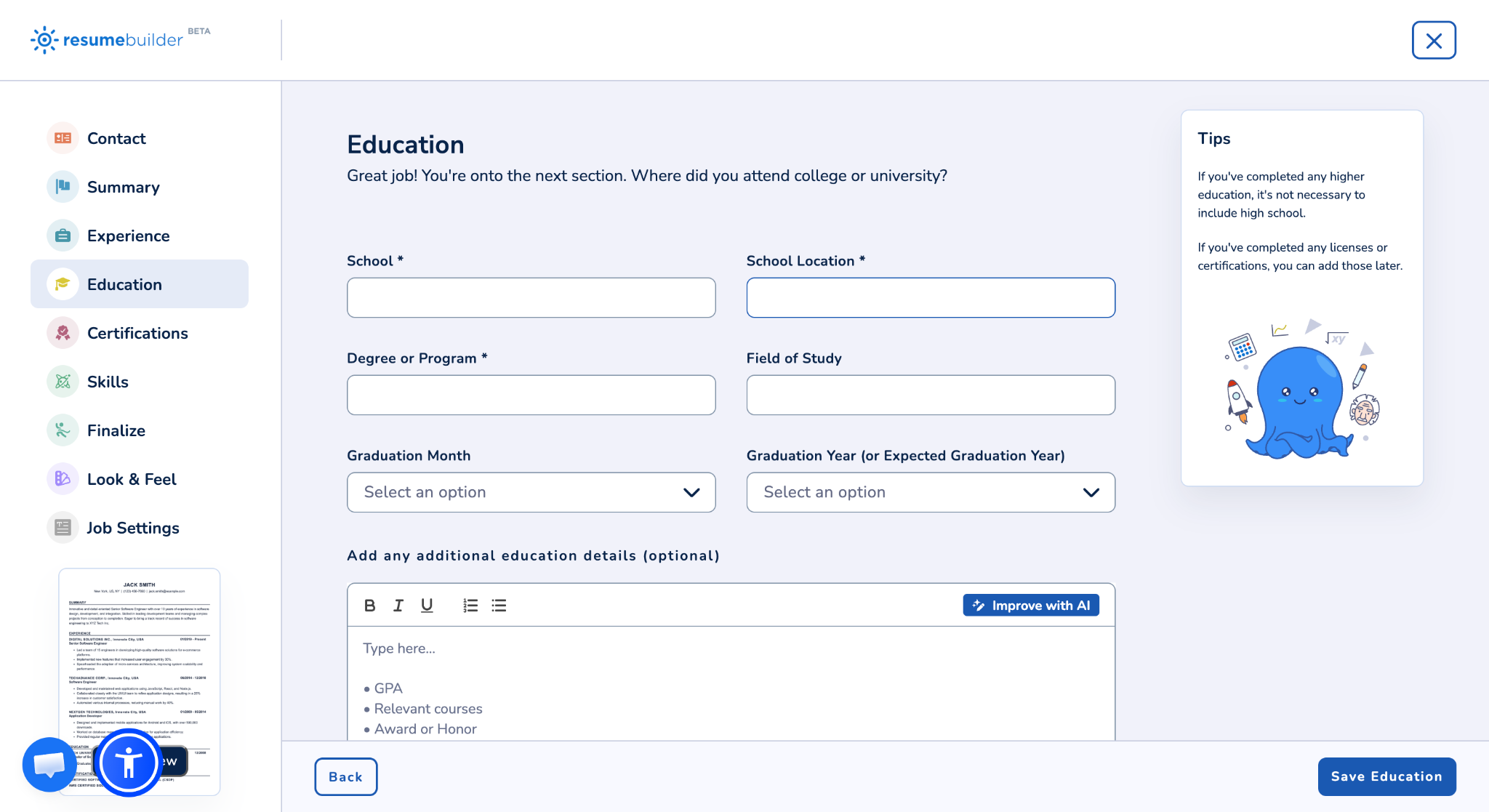
If you need help with this, Big Resume can help you create and customize your career fair resume.
Write your elevator pitch
Once your resume is ready, think about how you’ll introduce yourself in person. You may only have a few minutes with a recruiter, so you want to be able to quickly explain:
- who you are,
- what you’re interested in, and
- what you’re looking for.
A simple formula is: Your name + what you’re studying or doing + the type of role you want + something specific about your interests.
For example:
Hi, I’m Eve. I’m a junior studying computer science, and I’m looking for software engineering internships for next summer. I’m particularly interested in fintech, so I was excited to see your company is hiring for several technology roles.
That gives the recruiter enough information to understand what you’re looking for without turning your introduction into a five-minute biography. Be ready to listen and let the conversation develop naturally.
What makes a great elevator pitch for a career fair? - YouTube
Practice before the big day
The best way to make your introduction feel natural is to practice it out loud. Try it with a friend, family, roommate, career counselor, or mentor. Ask them to play the role of a recruiter and throw a few follow-up questions at you.
You can also use Big Interview’s interview simulator to rehearse different versions of the conversation.
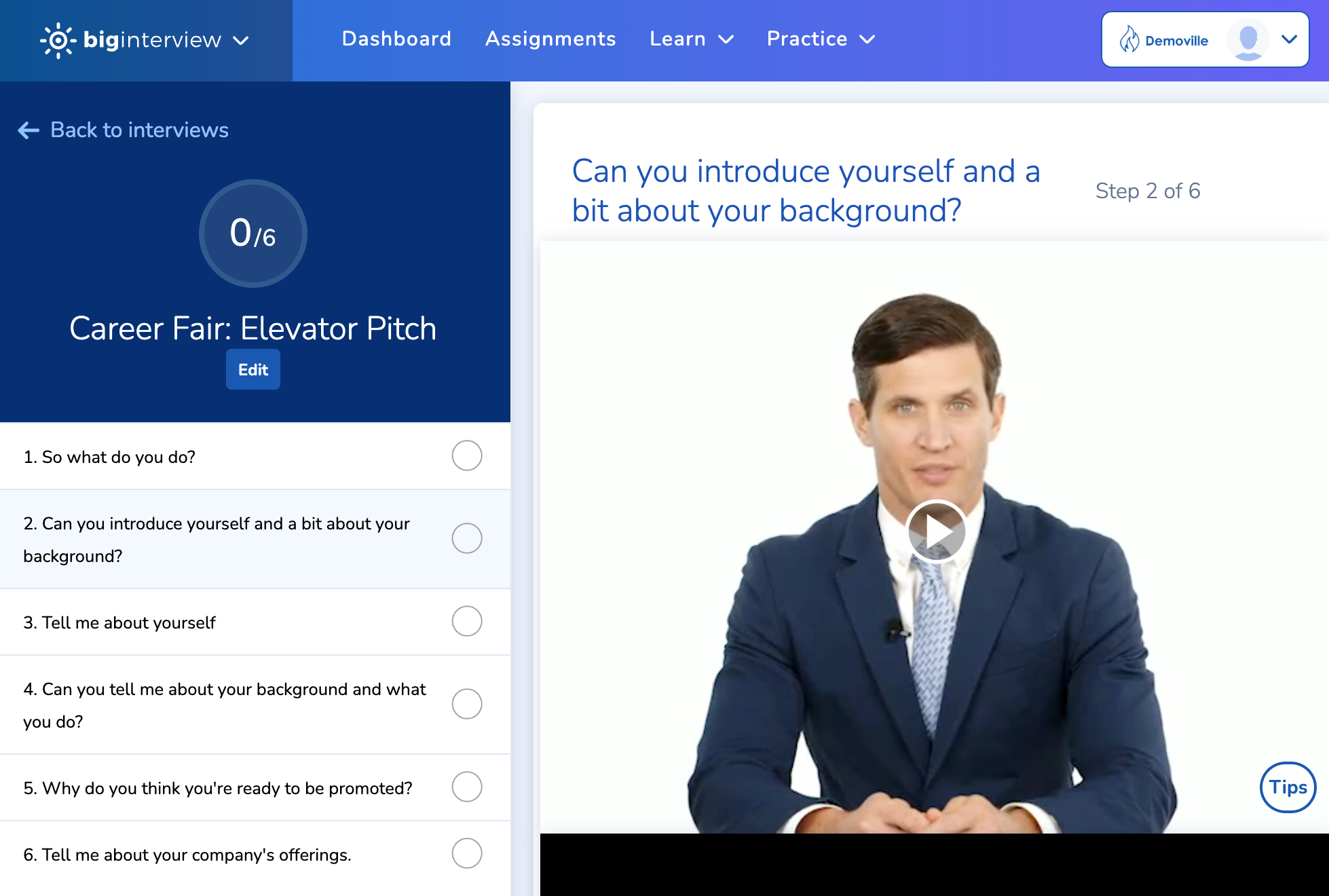
Practice answering questions like:
- “Tell me a little about yourself.”
- “What kind of role are you looking for?”
- “Why are you interested in our company?”
- “What experience do you have that’s relevant to this role?”
The Day Before the Career Fair: Pack, Plan, and Rest
The day before, get your practical details sorted, then give yourself a break.
Choose your outfit
Aim for business casual: professional and comfortable. You don’t need a full suit unless you’re heading into a more formal field like finance or law.
Here’s what our Chief Coach recommends for your career fair outfit:
- A smart blazer over a simple top (like a blouse or button-up shirt).
- Tailored pants or a knee-length skirt.
- Professional shoes, comfortable but polished (no sneakers or flip-flops)
- Wear classic colors like black, navy, gray, or white.
- Don’t wear anything too bright or flashy. If you want to stand out, do it through small details and accessories.
If you’re not sure, check the career fair’s website or ask your career center what they recommend.
Pack your bag
What to bring to a career fair:
- 10–15 copies of your resume
- Phone fully charged
- Charger or power bank
- Notebook and pen
- Water
- List of your priority employers
- Research notes and questions
Set your goals
Try setting three goals before you arrive:
Goal 1: Talk to your 5 priority employers — These are the companies you identified during your research. Even if some have long lines, make a point of getting to each one.
Goal 2: Have 3–5 additional conversations — These can be with your secondary employers or companies you discover once you’re there. You may find an interesting opportunity you hadn’t considered during your initial research.
Goal 3: Leave with clear next steps from at least a few conversations — That might mean submitting an application, completing an assessment, connecting with a recruiter on LinkedIn, or simply keeping an eye out for a particular opening.
Notice that none of these goals is “get a job offer.” Your goal for the day is to make good connections, learn more about opportunities, and give recruiters a reason to remember you when they review applications.
Career Fair Day
When you arrive
This may sound counterintuitive, but you don’t want to head straight for your number-one company the second you walk through the door.
Instead, start with two or three employers who are interesting but aren’t at the top of your list. Think of them as your warm-up rounds. You’ll get a chance to practice your introduction, get comfortable talking to recruiters, and work out any nervousness before you approach the companies you really want to impress.
Plan to visit your priority employer booths once you’ve found your rhythm.
When you approach a recruiter
Remember your elevator pitch, a clear introduction that gives the recruiter enough information to understand who you are and why you stopped at their booth.
Give them a little context, then ask a question.
“Hi, I’m Jordan. I’m a senior studying marketing, and I’m interested in roles where I can work on content and digital campaigns. I noticed your team works with a lot of different industries, and I was wondering what kinds of projects interns usually get to work on.”
Now the recruiter has something specific to respond to, and you have an opening for a real conversation.
Have a few good questions ready
You don’t need a long list, just a few thoughtful questions. Here are five questions to ask at a career fair:
- “What kinds of projects do interns typically work on?”
- “What skills are you looking for most in candidates for this role?”
- “What makes someone stand out in your internship applications?”
- “What does the hiring process look like after the career fair?”
- “Is there anything you recommend I highlight in my application?”
You don’t need to ask all five. Choose the one that makes the most sense for the conversation.
You also want to ask for a business card or contact information if you’re interested. Some employers provide a recruiter’s email, QR code, or another contact method.
Know when to move on
Pay attention to the flow of the conversation. If you’ve introduced yourself, asked a couple of questions, and established a possible next step, thank the recruiter and move on. You can say something as simple as:
Thanks, this was really helpful. I’ll make sure to apply and highlight my experience with [specific skill].
If the recruiter invites you to stay and talk longer, of course, keep the conversation going. Just make sure you leave the interaction on a positive note without monopolizing the recruiter's time.
The Day After the Career Fair: Follow Up While They Still Remember You
One of the easiest ways to turn a good conversation into an actual opportunity is to follow up while the interaction is still fresh, ideally within 48 hours.
Send a personalized follow-up email
A good follow-up message does four things:
Thank them → mention something specific → reinforce your interest → suggest a next step.
Mention something you discussed, a role you talked about, or a detail that made you particularly interested in the company.
For example:
Hi Sarah,
It was great meeting you at the career fair yesterday. I enjoyed our conversation about your company’s summer internship program, especially the opportunity to work on customer research projects. I’m very interested in the program and would love to stay in touch about next steps.
Thanks again for taking the time to speak with me.
If you had a good conversation with a recruiter, send a personalized LinkedIn connection request while the interaction is still fresh. They’re more likely to remember you when an opportunity comes up.