A four-year degree is still the traditional path to a high-paying career, but it’s no longer the only one. In 2026, many of the best-paying jobs don’t require a bachelor’s degree at all. Instead, they rely on apprenticeships, professional licenses, certifications, or hands-on experience.
That doesn’t mean these careers require no training. A traditional degree is often replaced by another type of investment: passing a licensing exam, completing an apprenticeship, earning a certification, or building experience in the field. The difference is that these routes are often faster, more affordable, and in many cases let you earn money while you train.
So why are more people looking at these careers now?
Why Is Everyone Suddenly Talking About Trades?
There’s a good reason these careers are attracting attention in 2026. The U.S. faces shortages of skilled workers, while reshoring, infrastructure investment, and an aging workforce are driving demand for electricians, mechanics, pilots, and other skilled professionals. The administration has also made expanding apprenticeships and skilled trades a major workforce priority, encouraging alternatives to the traditional four-year college path.
The timing also matters. AI is reshaping office and administrative work, so careers that require physical presence, hands-on problem-solving, decision-making, and human judgment remain among the hardest to automate.
Below, you’ll find 10 of the highest-paying jobs in the U.S. that don’t require a college degree.
For each one, we included the median salary, what top earners make*, the training or credential you’ll need instead of a degree, job growth outlook, and an honest assessment of how exposed the role is to AI.
*Salary data comes from the U.S. Bureau of Labor Statistics.
1. Construction supervisor
Median pay: ~$86,000 | Top 10%: ~$130,000+ | Projected growth: 6%
Construction supervisors oversee crews, coordinate projects, make sure safety procedures are followed and work is completed according to plans and deadlines. You can enter this role after you’ve gained years of experience in a construction trade.
Credential that replaces the degree: High school diploma + previous construction experience
Skills that matter: Leadership, project coordination, construction knowledge, safety awareness, communication, problem-solving, and decision-making.
AI outlook: Relatively safe. AI can help with scheduling, estimating, and project monitoring, but supervising workers, handling unexpected job-site problems, and making decisions in changing physical environments still require human judgment.
2. Heavy truck driver
Median pay: ~$57,000 | Top 10%: ~$79,000+ | Projected growth: 4%
Heavy and tractor-trailer truck drivers transport goods across the country, making them an essential part of the U.S. supply chain. The career doesn't require a college degree, although drivers typically attend professional truck-driving school and must obtain a commercial driver's license (CDL).
Credential that replaces the degree: Commercial Driver’s License (CDL) + professional truck-driving training
Skills that matter: Safe driving, concentration, route planning, time management, vehicle knowledge, and the ability to work independently.
AI outlook: Mixed. Autonomous trucking could eventually change the role, particularly on long-haul routes, but widespread adoption will depend on technology, regulation, infrastructure, and safety. Human drivers are likely to remain important in many driving environments in the near term.
3. Elevator and escalator installer
Median pay: ~$106,000 | Top 10%: ~$150,000+ | Projected growth: 5%
Elevator mechanics install, maintain, and repair elevators, escalators, and moving walkways. It is one of the highest-paying traditional trades because the work combines electrical, mechanical, and safety expertise.
Credential that replaces the degree: Apprenticeship (often four years) + state licensing where required
Skills that matter: Mechanical aptitude, electrical systems knowledge, blueprint reading, safety awareness, and diagnostic ability.
AI outlook: Very safe. The job requires working in physical environments, diagnosing unique problems, and performing hands-on repairs that are difficult to automate.
4. Air traffic controller
Median pay: ~$140,000+ | Top 10%: ~$200,000+ | Projected growth: 1%
Air traffic controllers coordinate aircraft movement, manage airspace, and make split-second safety decisions. While this role isn't a trade, it is one of the clearest examples of a high-paying career built around specialized training rather than a traditional four-year degree.
Credential that replaces the degree: FAA training program + certification
Skills that matter: Concentration, communication, spatial awareness, stress management, and rapid decision-making.
AI outlook: Very safe. Technology already assists controllers, but the role involves real-time judgment and safety accountability.
5. Electrical power-line installer and repairer
Median pay: ~$92,000 | Top 10%: ~$125,000+ | Projected growth: 7%
Line workers install and repair the electrical grid, restore power after storms, and maintain critical infrastructure.
Credential that replaces the degree: High school diploma + paid apprenticeship/on-the-job training
Skills that matter: Electrical knowledge, safety discipline, physical coordination, equipment operation, and emergency response.
AI outlook: Extremely resilient. The work is physical, outdoors, and constantly changing based on weather, location, and infrastructure conditions.
6. Transportation, storage, and distribution manager
Median pay: ~$102,000 | Top 10%: ~$180,000+ | Projected growth: 6%
These managers oversee supply chains, warehouses, shipping operations, and logistics teams. Many enter the field through experience rather than a degree.
Credential that replaces the degree: Industry certifications + years of operational experience
Skills that matter: Leadership, logistics planning, budgeting, data literacy, vendor management, and problem-solving.
AI outlook: Mixed. AI will automate forecasting, routing, and scheduling, but leadership, negotiation, and handling unexpected disruptions remain human responsibilities.
7. Aircraft mechanic and technician
Median pay: ~$79,000 | Top 10%: ~$120,000+ | Projected growth: 5%
Aircraft mechanics inspect, repair, and maintain aircraft systems. The career requires serious technical training but not a bachelor's degree.
Credential that replaces the degree: FAA Airframe and Powerplant (A&P) certification
Skills that matter: Mechanical and electrical repair, precision, troubleshooting, attention to detail, and regulatory compliance.
AI outlook: Safe. AI can improve diagnostics, but physical repair work and FAA-required human sign-off remain essential.
8. Wholesale and manufacturing sales representative
Median pay: ~$74,000 | Top 10%: ~$130,000+ | Projected growth: 1%
Sales representatives sell products and services to businesses, government agencies, and other organizations. Performance matters more than formal education, making this one of the strongest examples of skills-based hiring.
Credential that replaces the degree: Product knowledge, industry experience, and sales ability
Skills that matter: Relationship building, negotiation, communication, persuasion, and understanding customer needs.
AI outlook: Mixed. AI will automate prospecting and administrative tasks, but complex sales relationships and trust-building remain difficult to replace.
9. Property and real estate manager
Median pay: ~$67,000 | Top 10%: ~$140,000+ | Projected growth: 4%
Property managers oversee buildings, coordinate repairs, handle tenants, manage budgets, and maintain relationships with owners and vendors.
Credential that replaces the degree: Experience + state licensing requirements where applicable
Skills that matter: Organization, communication, negotiation, budgeting, customer service, and conflict resolution.
AI outlook: Moderate. Administrative tasks like scheduling and paperwork will become increasingly automated, but relationship management and real-world problem-solving remain valuable.
10. Occupational health and safety technician
Median pay: ~$58,000 | Top 10%: ~$95,000+ | Projected growth: 9%
Occupational health and safety technicians help keep workplaces safe by inspecting work environments, identifying hazards, testing equipment, and making sure companies follow health and safety regulations. They can work in offices, factories, construction sites, hospitals, and other workplaces.
Credential that replaces the degree: High school diploma + on-the-job training
Skills that matter: Attention to detail, safety awareness, inspection skills, problem-solving, knowledge of regulations, and communication.
AI outlook: Very safe. AI and new technologies can help identify hazards and monitor workplace conditions, but human presence and judgment will still be needed to inspect physical environments, evaluate risks, and implement safety procedures.
What to Do Next If One of These Careers Interests You
If you’re applying for an apprenticeship, a certification program, an entry-level role, your next challenge is proving you’re the right person for the job.
Many of these careers are built around skills you can demonstrate: problem-solving, attention to detail, safety awareness, communication, technical ability, and the ability to stay calm under pressure. But employers still need a way to see those skills in action — and that usually happens during the interview.
Before your next interview, take time to research the role, understand the skills employers are looking for, and practice explaining your experience with real examples.
Big Interview can help you practice your answers before the real conversation so you can walk in more confident and prepared.
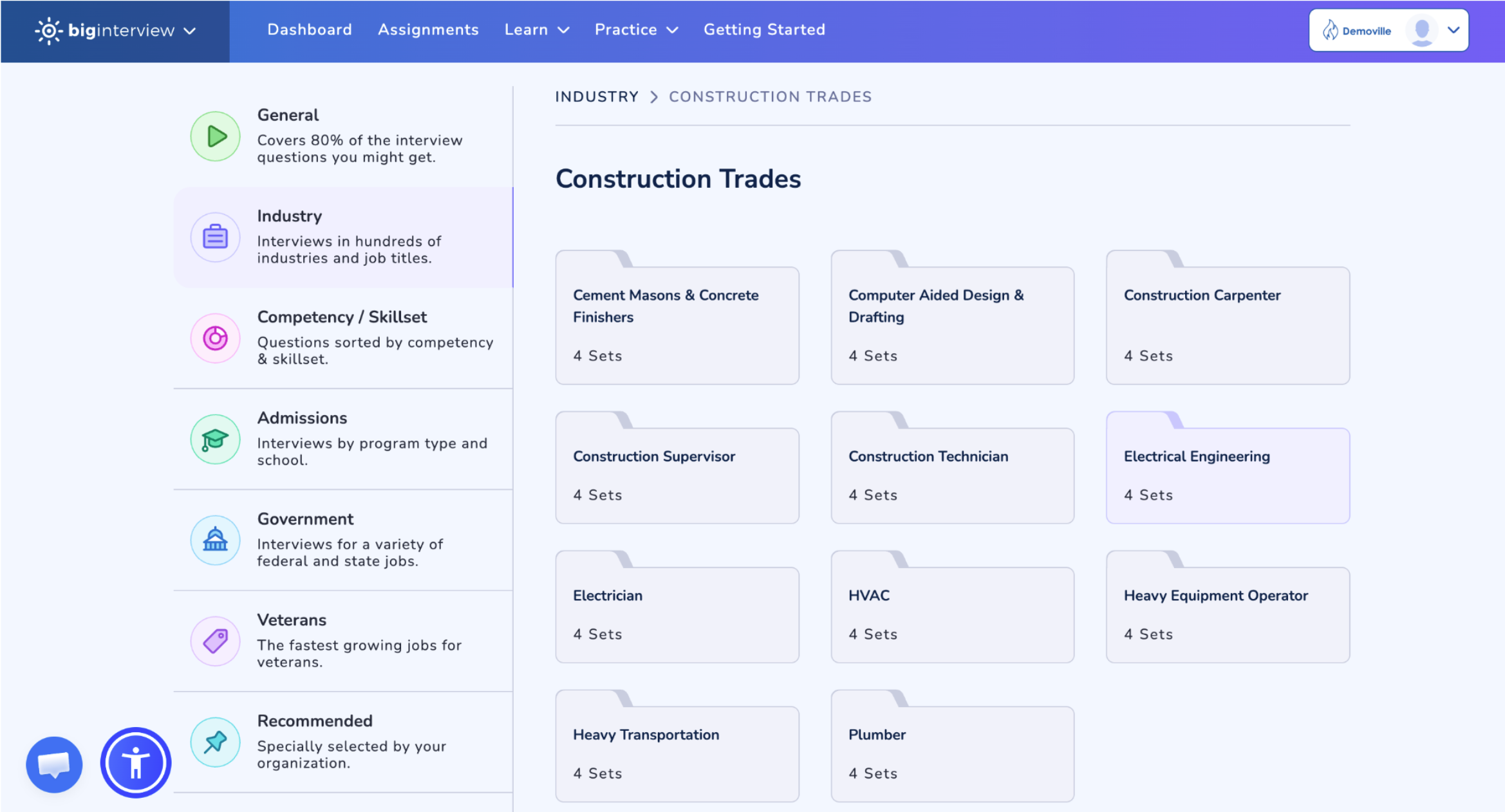
You can explore different career paths, including specific trades and competencies like decision-making or stress management, then prepare through realistic interview simulations.
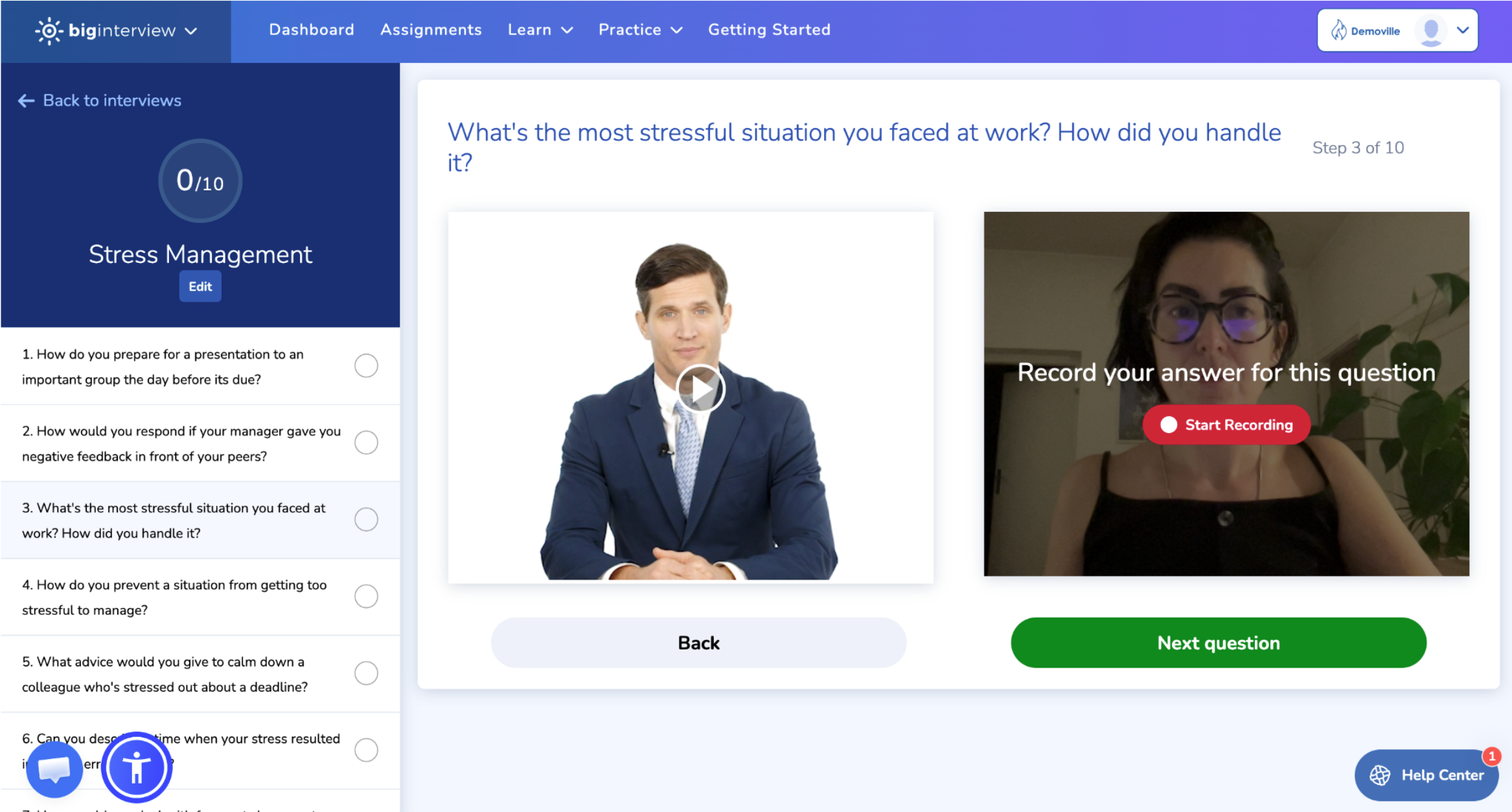
After each practice interview, you receive a score, detailed feedback, and specific areas to improve — along with guidance on how to strengthen your answers before the real interview.